Blog · · 3 min read
What Primer Does and When You Really Need It
Updated
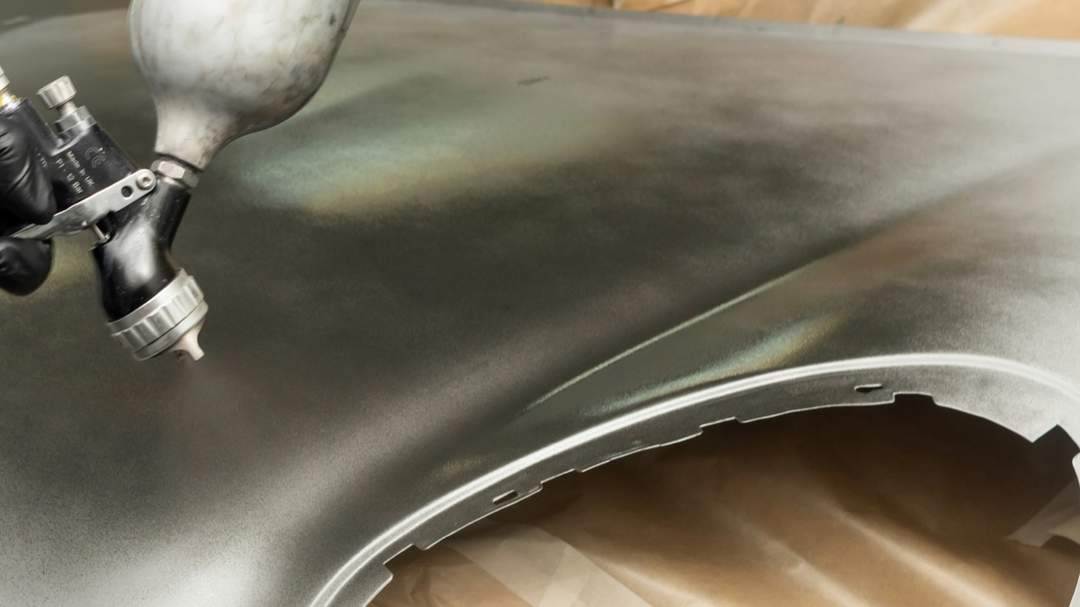
Primer is the first coat that goes on a surface before paint. You rarely see it, yet it decides how long the paint will last. Without primer, paint often fails to grip the surface, soaks in unevenly or cannot stop rust, and sooner or later the coat peels.
What primer does
Adhesion. Primer bonds firmly to the surface and gives the paint something to grip. This matters most on smooth metal, aluminium and plastic.
Protection. Anti-corrosion and epoxy primers protect metal from rust. If the paint is chipped, rust does not creep under the primer.
Even absorption. New plaster, drywall and MDF soak up paint unevenly and leave patches. Primer seals the pores so the paint goes on evenly.
Filling. Filler primer goes on in a thick layer, covers sanding scratches and fine unevenness, and is then sanded with fine paper.
Isolation. An isolating primer separates stains or solvent-sensitive old coatings from the new paint.
When you need it
Primer is essential on bare steel, aluminium and galvanised steel, plastic, new plaster and drywall, MDF, crumbling or chalky walls, and whenever you change paint systems, for example from synthetic to acrylic.
You can skip it only when the surface has sound old paint of the same type. That coat is cleaned, degreased, lightly sanded and painted over.
Which primer for which surface
Bare steel. Synthetic anti-corrosion primer, or epoxy primer for harsh conditions. Remove rust first: primer covers it but does not stop it.
Aluminium and galvanised steel. A special adhesion primer, or etch (wash) primer on cars. Ordinary primer peels off these surfaces.
Cars. Epoxy or etch primer on bare metal, 2K filler primer over body filler, sanded with P400 to P500. Wet-on-wet primer is not sanded, and the base coat goes on within a set time.
Plastic. Plastic adhesion primer. It does not work equally well on every plastic, so test it on a hidden spot first.
Wood and MDF. Polyurethane or nitrocellulose primer on furniture, MDF primer on MDF to seal the edges. Under clear lacquer, a transparent sanding sealer.
Walls and facades. Water-based penetrating primer that binds loose surfaces and evens out absorption.
How to apply it
Clean and degrease the surface, sand metal and old paint, and wipe off the dust with a tack cloth. Apply primer at the thickness given on the label: a thicker coat does not protect more, it only dries more slowly. Two-component primer is mixed with its hardener at the exact ratio.
The most common mistake is timing. Each primer has a window within which the paint must go on, or after which it must be sanded. Both figures are on the label, and keeping to them matters more than the brand.
Where to find it
All primers, from anti-corrosion to plastic, are on the primers page. Choosing the paint is covered in a separate article.
Frequently asked questions
What is primer?
The first coat applied to a surface before paint. It helps the paint grip, evens out absorption and protects metal from rust.
Is primer really necessary?
On bare metal, aluminium, plastic, new walls and MDF, yes. On sound old paint of the same type, cleaning and light sanding are enough.
How soon can I paint over primer?
It depends on the primer: some are ready in 20 to 30 minutes, others need several hours before sanding. The exact time is on the label.
Can I paint metal without primer?
No. Paint grips bare metal poorly and cannot stop rust, so the coat soon peels. Use an anti-corrosion or epoxy primer first.